Great Question vs Listen Labs
Listen Labs automates interviews with AI. Great Question gives you AI interviews, a write-capable MCP, human-moderated interviews, prototype tests, surveys, card sorts, tree tests, and the recruitment, scheduling, incentives, and AI repository to run enterprise research programs.
Fast, AI-generated consumer feedback at volume.
Every method, plus the operations to run a research program.
Trusted by 300+ customer-obsessed teams








Why Great Question Why teams choose Great Question
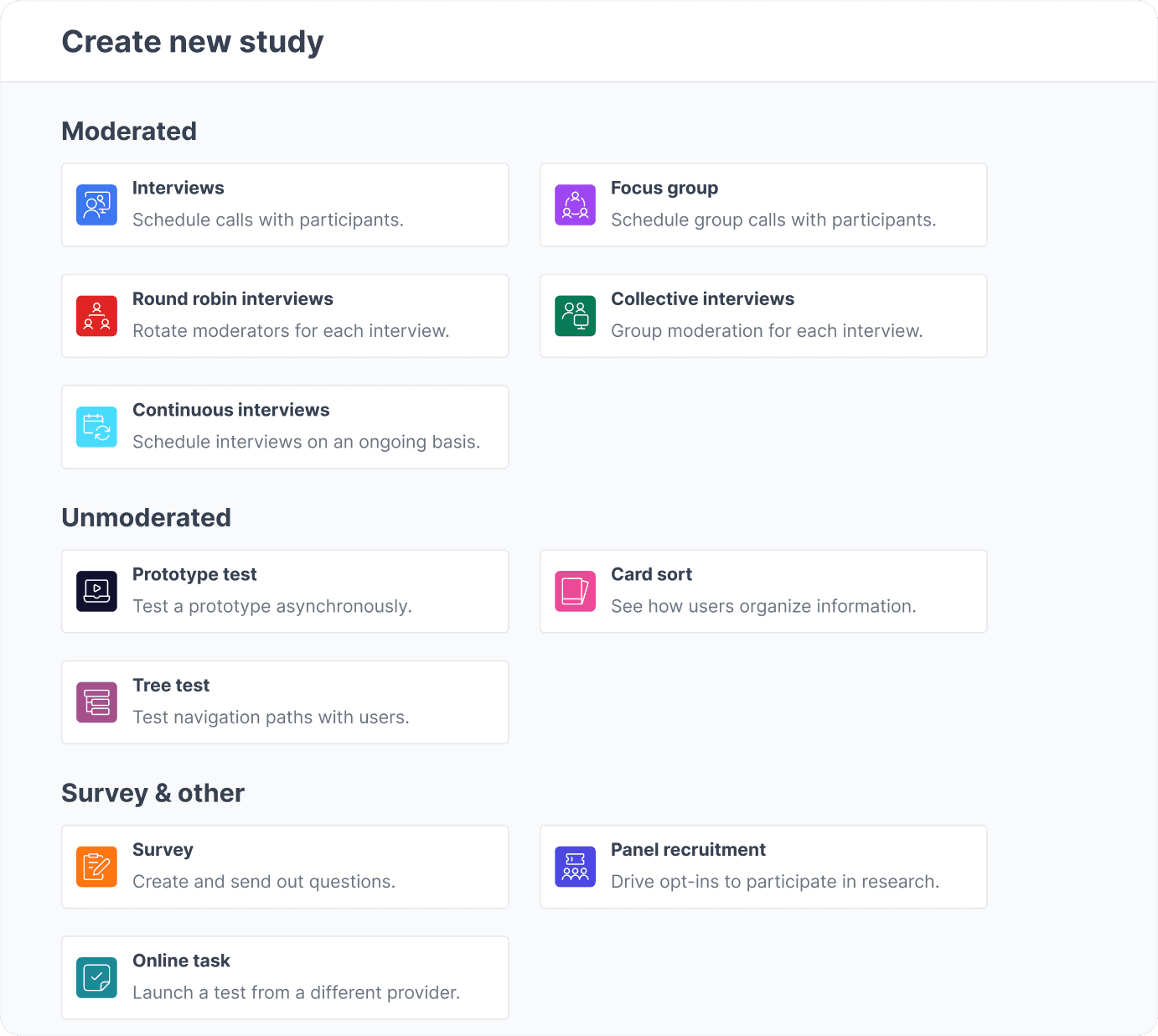
AI interviews are one method. You need all of them.
Research teams typically manage four to seven tools across recruiting, interviewing, testing, and analysis. Listen Labs handles one. Great Question replaces the stack: AI moderated interviews, prototype tests, surveys, card sorts, tree tests, and AI analysis. All in one platform.
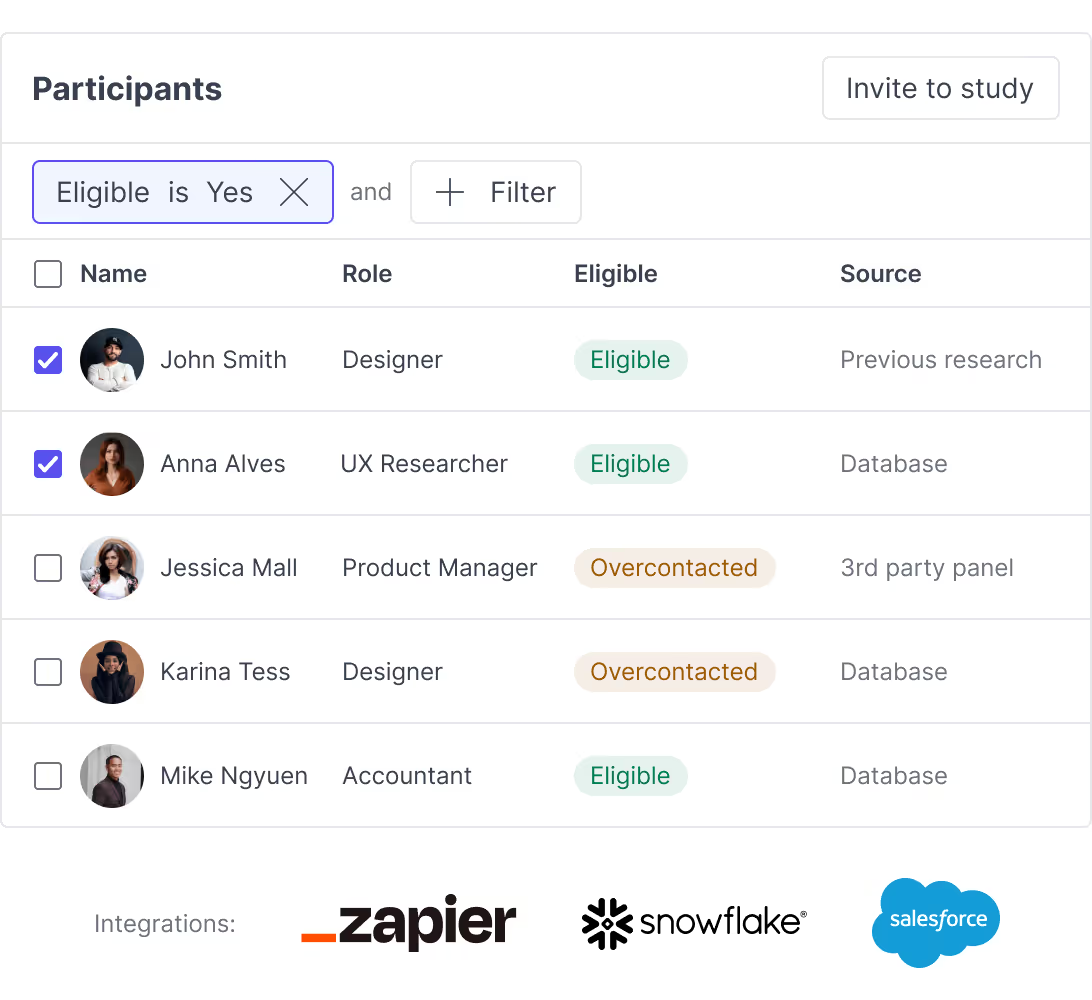
Participant CRM, not just sourcing
Listen Labs helps you reach participants, but doesn't offer deep panel management. Great Question adds screeners, segments, rules, scheduling, and history.
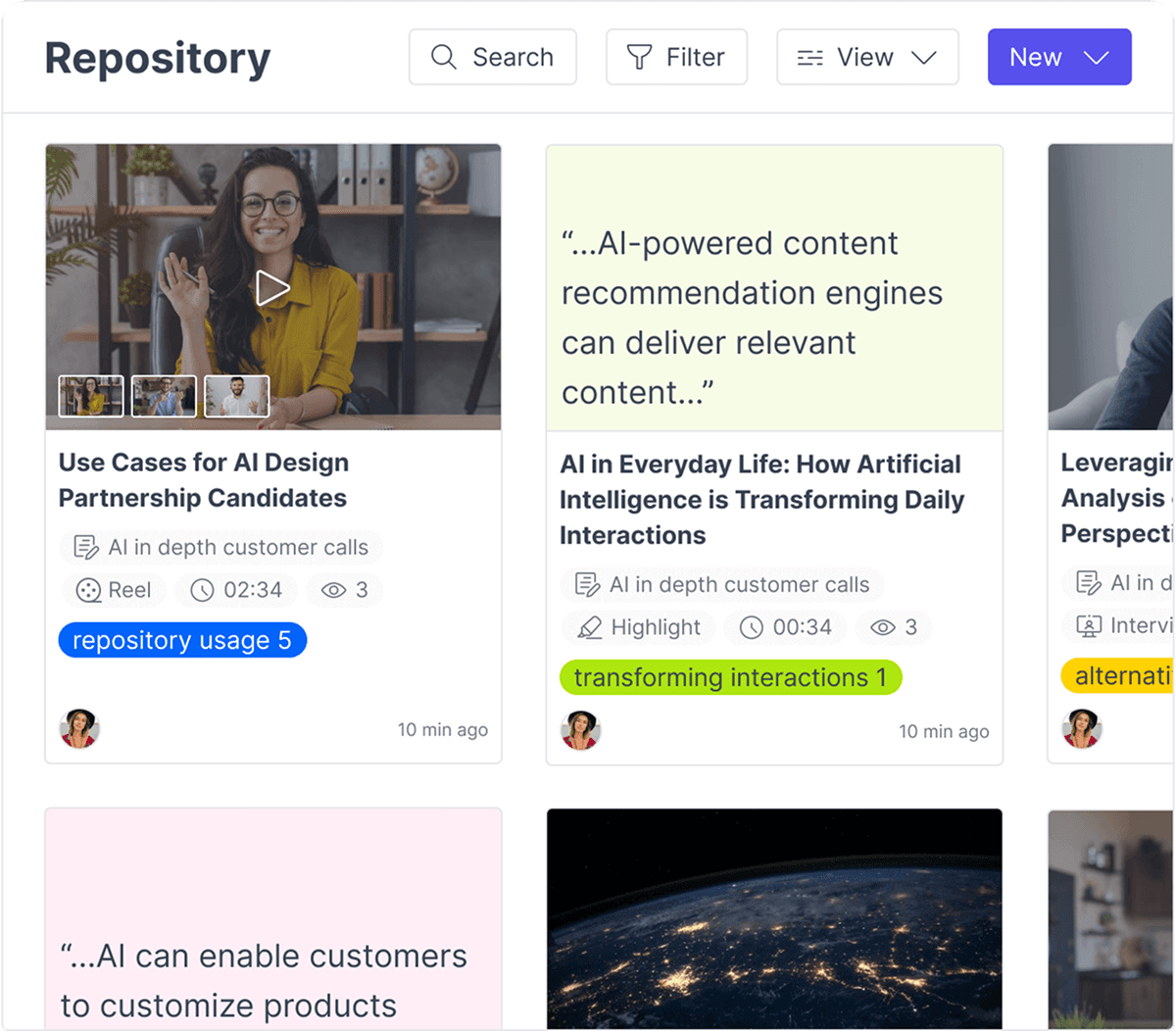
Summaries expire, insights compound
Great Question builds a searchable AI research repository where every transcript, theme, highlight reel, and insight is connected. Teams query findings from Claude, ChatGPT, or Cursor via MCP. No context lost between tools.
Main differences Main differences between Great Question & Listen Labs
See how the two products compare
AI interviews can't replace full research
Listen Labs automates interviews but doesn't support core UX methods like prototype tests, card sorts, tree tests, or unmoderated studies. Great Question gives teams the full toolkit: AI-moderated interviews, unmoderated tasks, prototype tests, surveys, and structured methods.
A conversation engine isn't a research workflow
Listen Labs runs interviews, but teams still need other tools for recruiting, screening, scheduling, incentives, and analysis. Great Question combines recruitment, segments, incentives, analysis, and insights in one AI connected workflow.
One place for all research data
Listen Labs generates summaries for each study. Great Question integrates interviews, tasks, analysis, and highlight reels into a shared repository that product, design, research, and leadership can all access.
Speed without governance is a liability
Listen Labs moves fast on interviews, but enterprise teams need participant controls, consent tracking, contact frequency rules, and audit trails. Great Question builds governance into the workflow: eligibility rules, participation history, automated incentives, and SOC 2 / GDPR / HIPAA compliance. Speed doesn't have to come at the cost of trust.
When to choose either tool
Choose Listen Labs if:
You need fast, AI-generated consumer feedback at volume: brand tracking, concept testing, or quick directional reads, and you don't need methodological variety or a persistent research repository. Listen Labs is built for consumer insights teams.
Choose Great Question if:
You run a research program or agentic research workflows. You need multiple methods, your own participant panel, a repository that compounds over time, and governance controls for enterprise compliance. Great Question is built for product builders, ResearchOps, and designers who do research with real customers and panels at scale.
Connect research to your AI tools
Give Claude, ChatGPT, or Cursor direct access to your research repository. One connection to all your customer insights.
- Query your entire research library from any MCP-compatible AI tool
- Synthesize across studies, transcripts, and highlights in a single prompt
- Pull findings into PRDs, design reviews, and Slack threads mid-conversation
- PII redacted by default, with role-based permissions applied automatically
Run this command in Claude Code to add Great Question as an MCP server.
claude mcp add --transport http great-question \
  https://greatquestion.co/api/mcp/v1
Compare Listen Labs & Great Question
See why Great Question is the best alternative to Listen Labs.
| Feature | Listen Labs | Great Question |
|---|---|---|
| Pricing | Custom pricing (not published) | Custom enterprise pricing |
| Access external participant panel | ||
| AI Moderated Interviews | ||
| AI powered analysis | ||
| Use your own panel of customers | ||
| SOC 2 / GDPR / HIPAA | Not published | |
| Additional UX methods (card sorts, tree testing, surveys, observer rooms and more) | ||
| Unmoderated testing | ||
| Panel management & eligibility rules | ||
| Automated incentives | ||
| In-platform scheduling | ||
| Human-moderated interviews | ||
| MCP that reads: query findings from Claude, ChatGPT, Cursor | ||
| MCP that writes: create studies, recruit, draft messages | ||
| Searchable cross-study repository |
Frequently asked questions
What is the difference between Great Question and Listen Labs?
Listen Labs is an AI-moderated interview tool. It's good at one thing: running automated interviews at volume. Great Question is an agentic UX research platform that runs AI interviews, human-moderated interviews, prototype tests, card sorts, tree tests, surveys, and unmoderated studies, plus the recruitment, participant CRM, scheduling, incentives, and searchable repository to run an entire research program. If you only need AI interviews, Listen Labs is a focused tool. If you run multiple methods or want your insights to compound across studies, you need a platform.
Does Listen Labs have a research repository?
No. Listen Labs generates a summary report for each study you run. Those reports are queryable through Listen MCP, but there is no research repository inside the product: no tagging, highlight reels, or cross-study library. Great Question includes a full research repository where every transcript, highlight reel, theme, and insight is tagged, searchable, and connected across studies, so your tenth study makes your first study more valuable, and product, design, and leadership all work from the same source of truth.
Can I use Listen Labs with Claude, ChatGPT, or Cursor?
Yes, to read. Listen Labs launched Listen MCP in April 2026, and it lets Claude, ChatGPT, Cursor, and other MCP clients pull themes, quotes, and cross-study synthesis out of a Listen workspace. It stops there: nothing you ask from those tools changes anything in Listen.
Great Question's MCP reads and writes. From the same tools it creates studies, builds screeners, recruits participants, drafts study emails, and pulls findings, with 130+ tools across the research workflow. See what the Great Question MCP can do.
How much does Listen Labs cost?
Listen Labs does not publish pricing on its website. Plans are custom and quoted per team. Great Question also offers custom enterprise pricing based on usage. Book a demo to get a quote and see how the two compare side by side.
What do Listen Labs reviews say?
Listen Labs is relatively new and has limited public reviews on G2 or Capterra. Early users praise the speed of AI-moderated interviews and the quality of automated reports. The most common gap reviewers note is the lack of additional research methods, panel management, and a persistent repository. Great Question has 100+ reviews on G2 with strong ratings for breadth of methods, participant management, and customer support.
What are the best Listen Labs alternatives?
If you need more than AI-moderated interviews (multiple research methods, your own participant panel, governance controls, and a repository that compounds insights over time), Great Question is the most complete alternative. A standalone AI interview tool still leaves you with separate tools for recruiting, scheduling, incentives, and analysis. Great Question consolidates that stack into one platform.
Don't just take our word for it.
“Great Question is a big part of how we build user centricity and our deep care for our community. It enables our teams to rally together around research.”


“Great Question got our attention because it's built for the new generation of researchers. They're doing what other tools have traditionally tried, which is build an end-to-end workflow for UX research, but they're actually doing it in a way that's sensible to researchers. You can see by the amount of detailed features that, as a researcher, you have to smile because they really get it.”

“One of the goals when we brought on Great Question was to grow the number of people comfortable running research. In that first year alone, we grew it from single digits to over 100 people running research at Brex.”

“We’ve been connected with Great Question for about four years… Seeing that vision come to life has built tremendous trust.”

Great Question facts
Is AI moderation live, and which plan includes it?
Yes. AI-moderated interviews are live, not in beta. They're an Enterprise add-on and aren't available on the Self-serve plan.
How big is the Great Question participant panel?
Great Question recruits external participants through two panels: Respondent (4.3M+ B2B and B2C participants) and User Interviews (7.5M+). They're separate providers, so there's no combined figure. Self-serve accounts recruit from Respondent. Enterprise accounts can choose either.
What can I prototype test in Great Question?
Figma prototypes, prototypes built with Lovable, v0, Replit or Claude, and live websites. Paste the URL and add your tasks. Prototype testing is on every plan.
Which video tools does Great Question work with for interviews?
Zoom, Google Meet and Microsoft Teams on every plan, including automatic Teams meeting links for interviews. Webex is available on Enterprise.
More Great Question comparisons
UserTesting
UserTesting charges you to research your own customers and expires your credits. Great Question gives you predictable pricing, CRM recruitment, free observer access, and every method in one platform.
Read the comparisonGreat Question vsDscout
Dscout rents you their panel and specializes in diary studies. Great Question lets you recruit from your own CRM, run any research method, and analyze everything with AI.
Read the comparisonGreat Question vsOptimal Workshop
Optimal Workshop specializes in information architecture testing. Great Question adds card sorting and tree testing plus interviews, surveys, prototype tests, recruitment, and AI-powered analysis on one platform.
Read the comparison