“The automated summaries and chapters perfectly complement the already excellent transcripts. They save me time when checking how an interview went, or synthesizing my own studies.”

Olivier ThereauxDirector of Product Research, Dashlane

Great Question AI works at every level of your research. It auto-generates summaries, chapters, highlights, and tags after every session. It lets you ask questions and synthesize themes across your entire repository. And with native MCP support, it connects all of that directly to Claude, ChatGPT, and Cursor, so your research shows up wherever your team is already working.
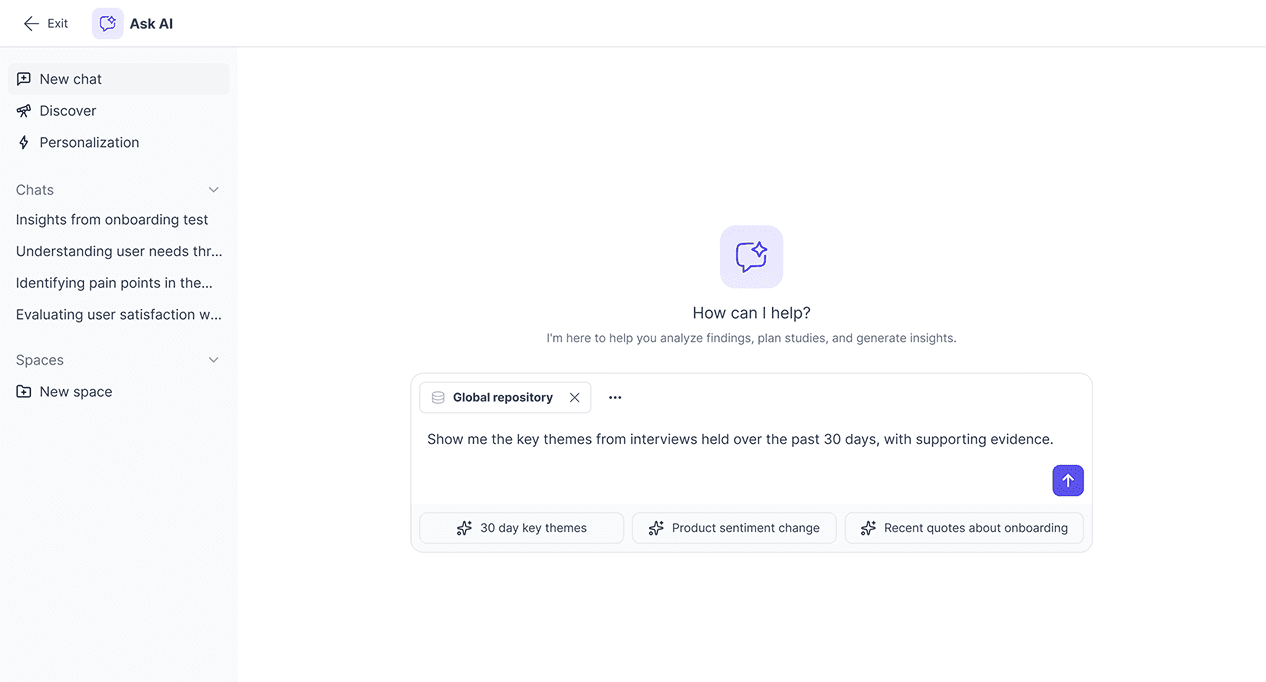
Query your entire research repository and hours of interview data in seconds. It has never been easier to extract insights from research. Ask for specific quotes, insights, or answers to questions. Ask for a custom summary or report.
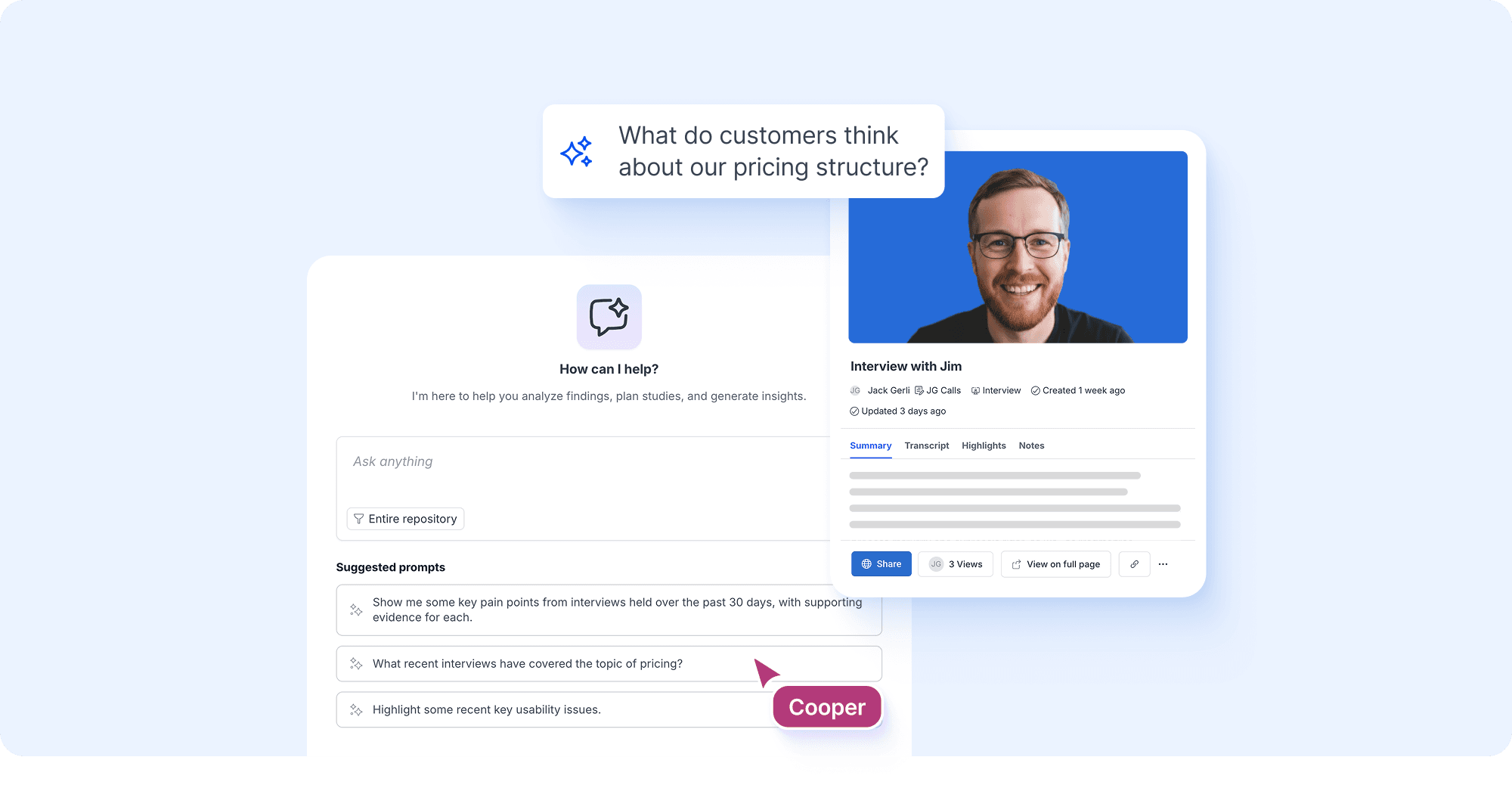
After every interview, Great Question AI can automatically generate summaries of key takeaways and themes, chapters for easy video navigation, highlights based on your study goal, and tags to organize all of your artifacts.
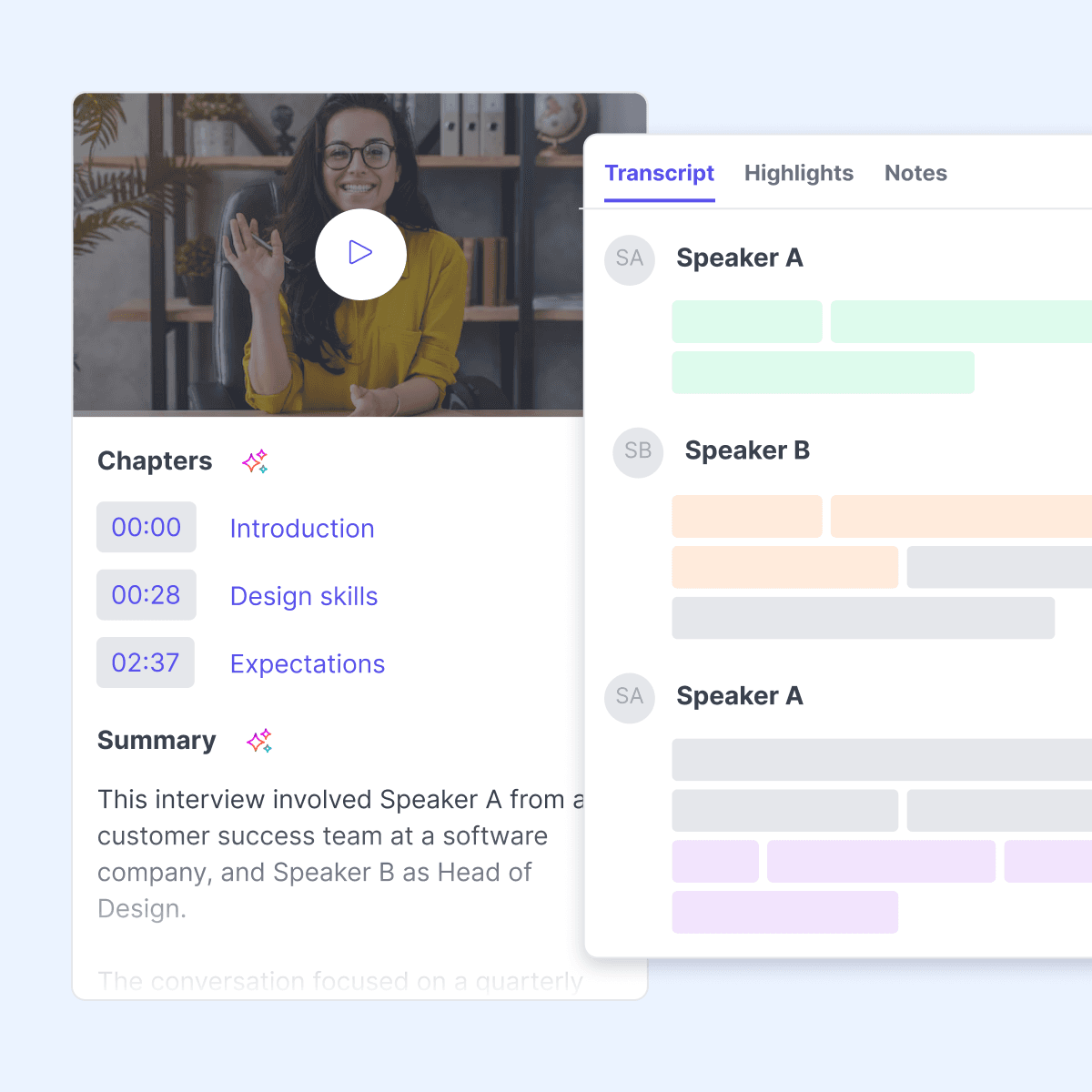
Every quote is linked to its original transcript, so you can jump to the exact moment it occurred and verify accuracy. Great Question masks PII from AI, so data will never be used by 3rd parties for training future models.
Give Claude, ChatGPT, or Cursor direct access to your research repository. One connection to all your customer insights.
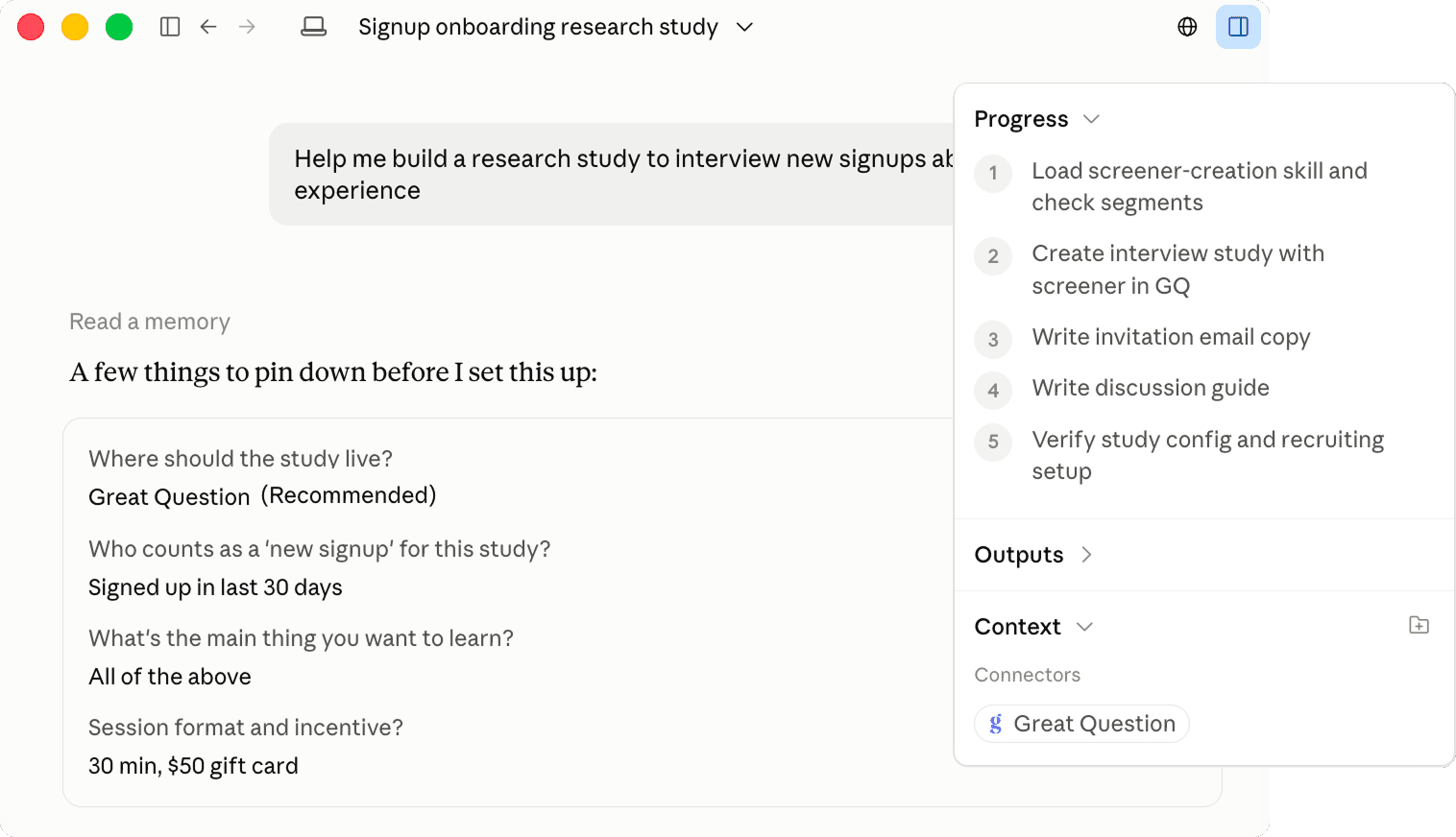
Run adaptive, natural interviews using AI moderated interviews that follow up, probe, and adjust in real time.
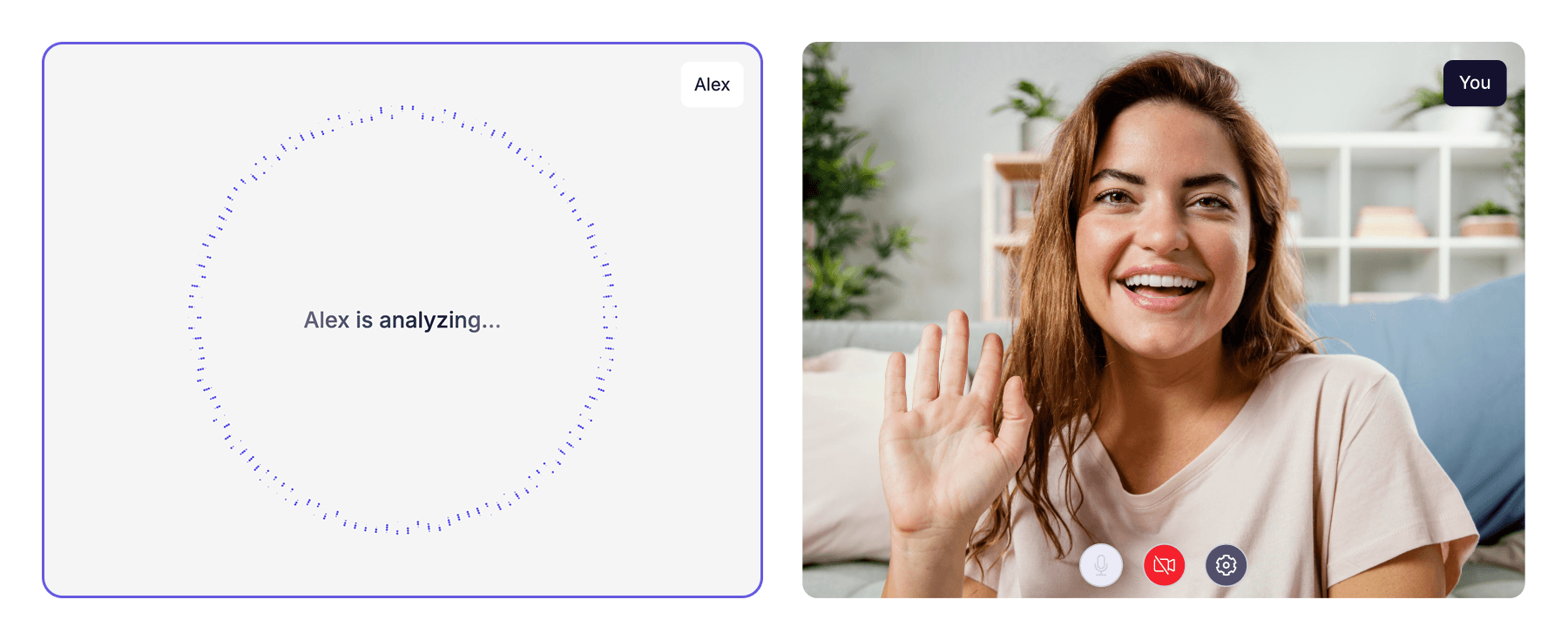
Built for researchers who need more than surveys, but don't have time for 100s of interviews
Integrated with recruitment, methods, and repository so insights flow
Scale qualitative research with conversation-level depth
“The automated summaries and chapters perfectly complement the already excellent transcripts. They save me time when checking how an interview went, or synthesizing my own studies.”
“With Ask AI, we can now get an initial analysis of hours of interviews in minutes. This feature helps us move faster when understanding user needs and problems and creating features to address them.”

“The AI Assistant has expedited my data analysis process and streamlined the time to provide early research insights to our organization. Thank you for developing a tool that makes my job easier.”


Great Question AI auto-generates summaries, chapters, highlights, and tags after every interview session. You can also ask questions across your full research repository to synthesize themes and surface quotes from any study. With MCP support, your research connects directly to AI tools like Claude, ChatGPT, and Cursor.
Great Question AI processes your session recordings and transcripts automatically. After each interview, it generates a structured summary, marks key highlights based on your study goal, creates navigable chapters, and suggests tags. You don't need to configure anything beyond enabling it in your AI Preferences.
Meets you where you're at: our AI features are thoughtfully designed to augment your existing research workflows on Great Question.
Pre-integrated: each AI query receives the right data and context it needs to perform the task, resulting in responses that are relevant and high-quality.
Query large studies: you can easily query large studies with up to 50 hours worth of interview transcripts, something that isn't possible with tools such as ChatGPT.
Security and privacy controls built in: data containing PII is automatically masked by Great Question, and data will not be used by 3rd parties for training future models.
Ask AI is powered by the latest AI models.
Speaker names and interview titles are masked by Great Question, so they are not sent to OpenAI. When the AI returns the response, we re-attach this information. We also attempt to remove any PII included in the spoken and transcribed text of interviews.
No, we have prohibited the use of any data sent to OpenAI for training models.
Hallucination is rare because we instruct the AI to make statements and quotes from the context document that we supply it with, rather than relying on its internal knowledge from training. We were not able to produce any significant hallucinations in our tests.
When the AI generates quotes, we find the corresponding section of the transcript and hyperlink it, providing assurance that the quote is verbatim. However, LLMs can make mistakes, so care needs to be taken to check responses before they are published or acted on.
It varies between different AI features, but we generally supply anonymised interview transcript excerpts, study metadata (e.g. research goal), and tagged highlights to the AI to produce responses.
Usage of AI features is not limited, but is subject to fair use policies.